
Sugarcane is one of the most water-intensive commercial crops in the world, requiring up to 1,500 to 2,500 mm of water throughout its 12-to-18-month growing cycle. For sugarcane plantation managers, transitioning from traditional furrow flooding or rain-fed cultivation to Center Pivot Irrigation Systems delivers significant yield increases, drastically reduces labor costs, and optimizes water use efficiency.
However, irrigating sugarcane presents extreme mechanical challenges due to its massive biomass, extreme stalk height (reaching over 4 meters at maturity), and dense canopy cover. Below is a comprehensive engineering and agronomic guide to configuring center pivot systems specifically for sugarcane production.
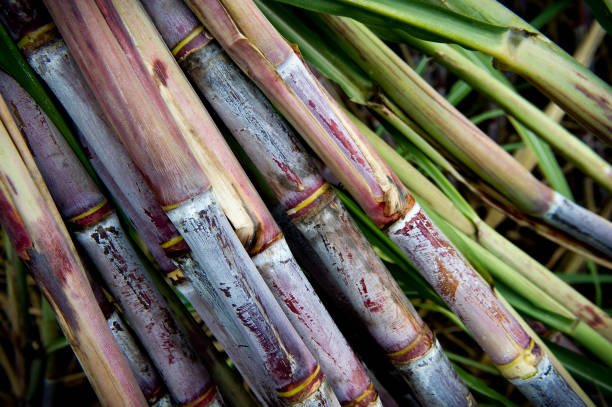
1. Structural Requirements: Ultra-High Clearance & Heavy-Duty Spans
As sugarcane approaches maturity, standard pivot clearance is insufficient to navigate the field without damaging the crop canopy or causing stalk lodging.
- Ultra-High Clearance Towers: Sugarcane pivots require specialized extended tower legs that provide an under-pipe clearance of 4.1 to 4.6 meters. This allows the machine to sweep smoothly over fully grown cane stalks without mechanical drag or leaf wrap on structural components.
- Heavy-Duty Structural Trussing: With long growing cycles and heavy water volumes, span structures must utilize high-yield galvanized steel tubing and reinforced V-bridge truss rods. This prevents structural flexing and fatigue under continuous heavy-duty operation.
- Corrosion Resistance against High Humidity: Sugarcane microclimates retain dense humidity under the canopy. Full interior and exterior hot-dip galvanizing on all structural components and pipelines guarantees protection against rust and premature chemical degradation.
2. Hydraulic Design: Supporting High Flow Rates with Low Energy
Sugarcane requires continuous, high-volume irrigation applications during its peak vegetative growth phase.
- Large Pipeline Sizing ($\varnothing 168\text{ mm}$ to $\varnothing 219\text{ mm}$): To deliver high flow rates (often exceeding $300 \sim 400\text{ m}^3/\text{h}$) over broadacre fields without excessive pressure losses, main pipelines must be sized to $6\ 5/8\text{ inches}$ ($\varnothing 168\text{ mm}$) or $8\ 5/8\text{ inches}$ ($\varnothing 219\text{ mm}$). Larger pipe diameters reduce internal fluid velocity, keeping friction head loss low and slashing pumping electricity costs.
- Top-Mounted High-Throw Sprinklers: Drop hoses can snag or break in dense 4-meter cane. Instead, sugarcane pivots utilize top-mounted or rigid mid-boom sprinklers equipped with high-trajectory rotators. This delivers a wide, overlapping spray pattern over the top of the canopy, ensuring complete coverage without crop interference.
- Pressure Regulators ($1.4 \sim 2.0\text{ bar}$): Installing inline pressure regulators at each nozzle compensates for minor elevation changes across the field, maintaining precise water distribution uniformity (UC > 90%) from the pivot center to the outer overhang.
3. Drive Train & Traction Engineering in Heavy Soils
Sugarcane fields often feature heavy clay or alluvial soils that remain wet and muddy during continuous irrigation regimes.
- High-Flotation Wheels & Wide-Tread Tires: Utilizing wide, high-flotation agricultural tires (e.g., 14.9–24 or radial flotation options) spreads the machine’s structural weight, preventing deep wheel ruts that could disrupt future mechanical harvesting equipment.
- High-Torque Worm Gearboxes: Reinforced wheel gearboxes with high-strength worm gears ensure continuous, slip-free drive torque through muddy ruts and over field drainage furrows.
- Cardan Universal Couplers: Flexible universal joints between spans absorb heavy torsional twisting when adjacent towers cross uneven field drainage channels or contours.
4. Strategic Ripening & Precision Fertigation Management
Irrigation management plays a critical role not only in growing cane tonnage, but also in optimizing sugar recovery (brix content).
- Late-Season Ripening Control (Drying-Off): In the final 6 to 8 weeks before harvest, irrigation must be systematically reduced to induce moisture stress. This slows vegetative growth and converts accumulated plant sugars into sucrose. Advanced smart control panels allow growers to execute precise water-reduction programs automatically.
- Targeted Fertigation & Ripener Application: Center pivots serve as a continuous delivery system for nitrogen, potassium, and chemical ripeners during peak growth stages when tractor ground rigs can no longer enter the dense, tall cane fields. Injecting fertilizers directly through the pivot eliminates field pass costs and ensures immediate root uptake.
Sugarcane Pivot Engineering Checklist
| System Component | Recommended Specification | Agronomic / Operational Benefit |
| Under-Pipe Clearance | $4.1\text{ m} \sim 4.6\text{ m}$ (Ultra-High Clearance) | Prevents stalk lodging and leaf drag in mature cane |
| Pipeline Diameter | $\varnothing 168\text{ mm}$ ($6\ 5/8″$) or $\varnothing 219\text{ mm}$ ($8\ 5/8″$) | Accommodates high flow rates ($>300\text{ m}^3/\text{h}$) with minimal friction loss |
| Sprinkler Package | Top-Mounted / Rigid Boom Rotators | Avoids drop hose entanglement in dense 4-meter canopy |
| Drive Tires | Heavy-Duty High-Flotation Radials | Eliminates deep wheel ruts for smoother mechanical harvesting |
| Chemical Injection | Integrated Precision Fertigation Skid | Allows late-stage nutrient and ripener application without field traffic |
Boost Your Sucrose Yield per Hectare
By pairing ultra-high clearance engineering with optimized high-flow hydraulics, center pivot systems enable sugarcane producers to maximize sucrose tonnage, cut pumping energy, and lower overall operational expenses season after season.
🌱 Planning a large-scale sugarcane irrigation project?
Contact our engineering application team with your field maps, pump station capacity, and soil profiles to receive a custom CAD field layout and hydraulic head-loss calculation!