
When designing a large-scale mechanized irrigation project for rectangular or square agricultural fields, selecting the right linear move irrigation system is only half the decision. Farm managers and agricultural engineers must also determine how the system will receive a continuous, uninterrupted supply of water as it travels back and forth across hundreds of meters of farmland.
Linear move systems generally rely on one of two primary water supply configurations: Hose Feed (PE Pipe) or Ditch Feed (Canal Pull). Each method offers distinct structural advantages depending on water availability, field geometry, infrastructure investments, and flow volume requirements.
This article provides a technical comparison of hose feed and ditch feed linear irrigation systems to help you select the optimal configuration for your commercial farm.
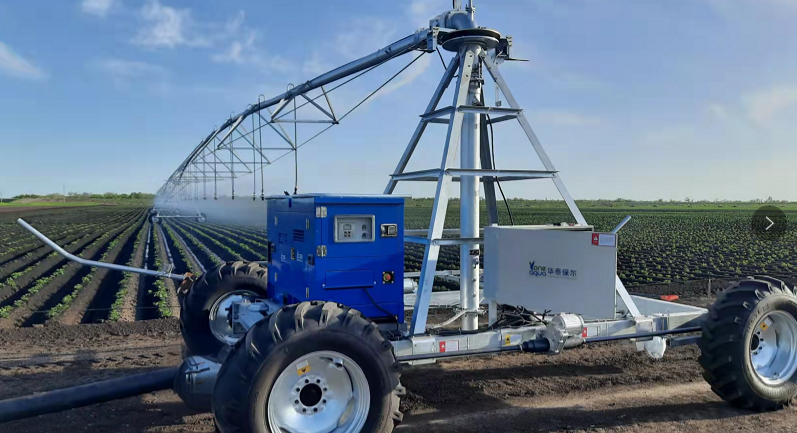
1. Hose Feed (PE Pipe) Linear Systems Explained
Hose feed linear systems draw water through a heavy-duty, flexible polyethylene (PE) drag hose connected to pressurized underground hydrants positioned at regular intervals along the machine’s travel path.
How It Operates
As the linear span travels across the field, it pulls the flexible drag hose behind it. Once the machine reaches the end of its run or hydrant span, the operator switches the hose connection to the next underground hydrant (or utilizes an automated double-hose switching system).
Key Advantages
- Closed Pressurized System: Keeps water clean and pressurized directly from the mainline, preventing contamination from dust, algae, or debris.
- No Open-Channel Infrastructure: Eliminates the need to construct, line, and maintain open concrete water canals across the farm.
- Flexible Routing: Ideal for medium-to-large rectangular fields with existing underground pipeline networks.
2. Ditch Feed (Canal Pull) Linear Systems Explained
Ditch feed linear systems draw water directly from an open, continuous concrete canal or ditch running parallel to the machine’s travel path via an onboard diesel engine pump unit or floating suction intake.
How It Operates
A pump mounted on the central cart or primary tower drops a suction intake directly into the parallel water canal. As the machine travels up and down the field, the pump travels alongside, continuously drawing and pressurizing water from the open channel.
Key Advantages
- Continuous Uninterrupted Operation: Eliminates the need to stop and switch hydrants, allowing 24/7 continuous irrigation over long field runs.
- Massive Flow Rates ($m^3/h$): Perfectly suited for massive commercial farms requiring high water volumes to meet high crop evapotranspiration rates.
- Lower Underground Piping Costs: Utilizes regional or farm-level open water distribution networks rather than extensive buried PVC/steel pipe grids.
3. Technical Decision Factors for Farm Selection
- Water Source & Infrastructure: Assess whether your farm relies on existing pressurized underground mainlines or open water canal networks.
- Flow Volume ($m^3/h$): High-acreage, arid farms with massive water demands lean toward ditch feed systems, while moderate acreage suits hose feed configurations.
- Capital Expenditure (CAPEX): Compare the cost of installing underground hydrants versus building lined open water canals.
Engineer Your Field Water Supply with HT Bauer
Whether your agricultural operation requires a flexible hose feed linear system or a high-capacity ditch feed canal pull machine, HT Bauer provides expert hydraulic engineering, custom field layout designs, and heavy-duty manufacturing.
Contact our international engineering team today to evaluate your water source and design the ideal linear irrigation setup.
- Official Website: HT Bauer Irrigation Systems
- Sales Email: sunlei@htbauer.com | sunlei.htbauer@gmail.com
- Inquire Now: Request a technical consultation and custom water supply proposal.