
Operating continuous, heavy steel span structures across flat agricultural fields is straightforward. However, as modern commercial farming expands into rolling hills, terraced valleys, and undulating land, machinery must be specifically engineered to handle complex topographies.
While center pivots struggle to navigate changing elevations or leave significant dry corners on sloped plots, advanced linear move irrigation systems can be custom-engineered to master hilly terrains. Achieving reliable performance on slopes requires specialized structural design, flexible engineering, and robust traction control.
This article explores the core structural features that allow linear move irrigation systems to operate smoothly across sloped and undulating agricultural land.
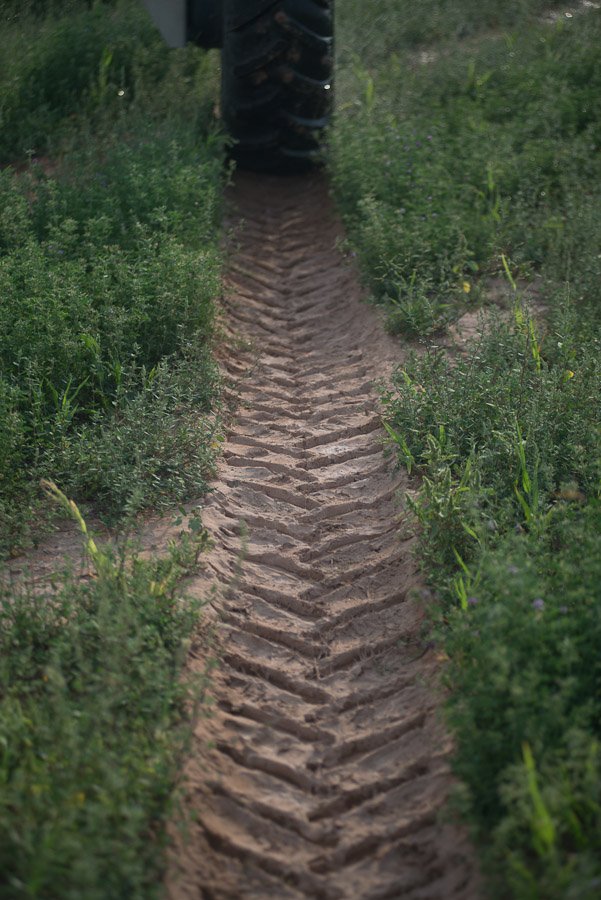
1. Key Structural Features Engineered for Sloped Terrains
To prevent structural twisting, pipe joint fatigue, and wheel slippage on inclines, sloped linear systems incorporate several critical engineering adaptations.
Heavy-Duty High-Flotation Tires & Traction
Operating on slopes increases the risk of wheel slippage and deep rut formation, especially when soils are damp. Equipping drive towers with high-flotation tires or deep-lug agricultural treads maximizes grip, distributes machine weight evenly, and prevents downhill sliding.
Flexible Span Couplings & Universal Joints
As drive towers traverse varying elevation contours, individual spans move at different relative heights. Heavy-duty flexible rubber boots, ball-and-socket joints, or universal couplings at span connections allow smooth angular deflection without placing destructive torsional stress on the main steel pipeline.
High Ground Clearance Chassis
Rolling and terraced fields often feature sharp grade transitions, humps, and drainage ditches. Designing the chassis and drive tower frames with high ground clearance ensures the undercarriage clears terrain obstacles without scraping or hanging up.
2. Maintaining Alignment on Slopes
Lateral slope drag can cause individual towers to drift sideways off their intended straight-line path. Sloped linear systems utilize advanced guidance options—such as high-precision RTK/GPS steering—to continuously correct tower steering angles, ensuring the entire machine maintains synchronized lateral movement despite gravity pull.
3. Best Applications for Sloped Linear Systems
- Terraced Agricultural Fields: Navigating stepped bench terraces where uniform straight-line coverage is essential.
- Rolling Hills & Undulating Pastures: Maximizing cultivated acreage across sloping terrain that cannot accommodate fixed circular pivots.
Engineer Your Sloped Field Systems with HT Bauer
Challenging topography should never limit your farm’s productivity. HT Bauer designs heavy-duty linear move irrigation systems built with superior structural flexibility, high-traction drive towers, and rugged durability for sloped and complex terrains worldwide.
Contact our international engineering team today to evaluate your sloping land and design a custom irrigation layout.
- Official Website: HT Bauer Irrigation Systems
- Sales Email: sunlei@htbauer.com | sunlei.htbauer@gmail.com
- Inquire Now: Request a terrain adaptation consultation and custom proposal.