
A hose reel irrigator relies entirely on adequate hydraulic pressure and water volume to operate. The water pressure supplied at the machine inlet performs two simultaneous tasks: powering the internal drive turbine to automatically retract the PE pipe, and pushing water through the rain gun or spray boom across the field.
Pairing a hose reel irrigator with an incorrectly sized pump set leads to poor retraction speed, reduced throw radius, uneven watering, or severe pump cavitation. This technical guide outlines how to calculate hydraulic demands and select the ideal pump drive option for your operation.
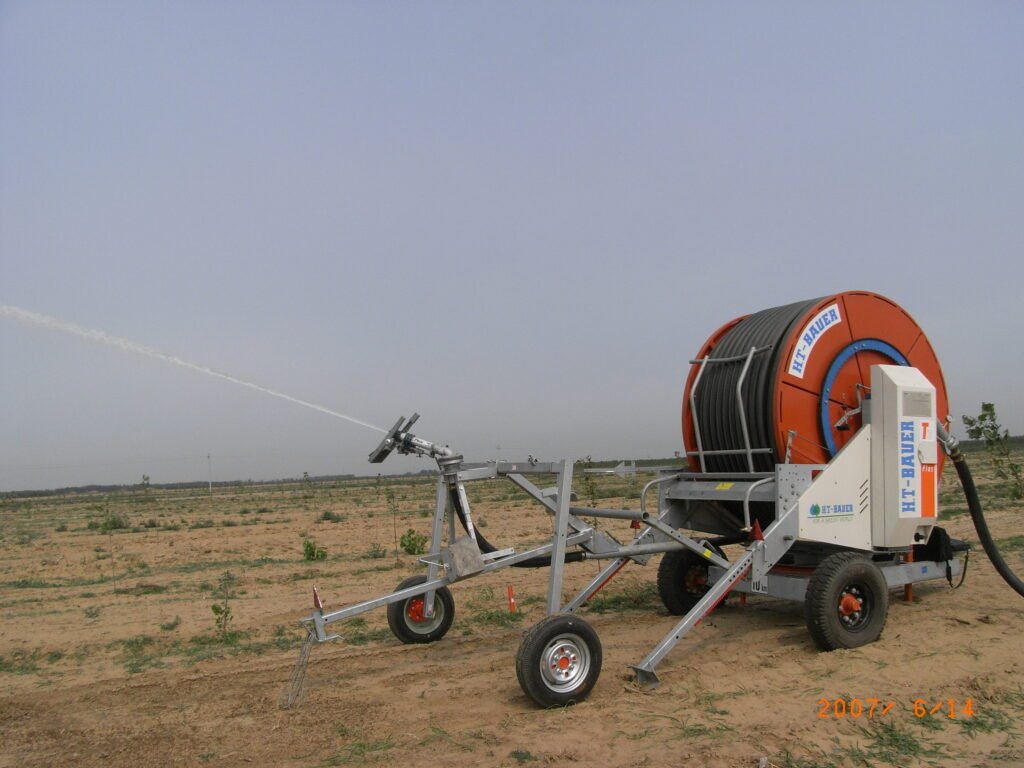
1. Understanding Hydraulic Demands of Reel Irrigators
To choose the correct pump, agricultural engineers must determine two core metrics: Total Dynamic Head (TDH in bar/meters) and System Flow Rate ($m^3/h$).
Calculating Total Dynamic Head (TDH)
The required pump discharge pressure must compensate for four friction and pressure loss factors:
- Nozzle Pressure: Required pressure at the rain gun or spray boom (typically 3.0–5.0 bar for rain guns; 2.0–3.0 bar for booms).
- PE Pipe Friction Loss: Pressure dropped as water travels through hundreds of meters of coiled polyethylene pipe (varies by pipe length, internal diameter, and flow rate).
- Turbine Pressure Loss: Pressure required to drive the internal water turbine mechanism (typically 0.5–1.5 bar).
- Elevation Head Loss: Friction loss from pumping uphill across uneven field contours.
Determining System Flow Rate ($m^3/h$)
The pump flow rate must match the chosen nozzle diameter and required crop precipitation depth (mm/hour) to ensure effective root zone saturation without causing surface runoff.
2. Pump Drive Options: Pros & Cons
Select the drive power source that best aligns with your field infrastructure, power access, and mobility needs.
Tractor PTO Pumps
Tractor Power Take-Off (PTO) pumps couple directly to the tractor’s rear shaft, using the engine as the power source.
- Pros: Low initial capital cost; highly mobile for pulling water from temporary farm ponds, canals, or ditches.
- Cons: Ties up a tractor during the entire irrigation cycle; higher fuel consumption for prolonged runs.
Diesel Engine Pump Sets
Self-contained diesel engine pump units are mounted on heavy-duty wheeled chassis or stationary skids.
- Pros: Complete operational independence; continuous running capability for remote fields lacking electrical grid infrastructure; highly fuel-efficient engines designed for continuous agricultural duty.
- Cons: Requires routine engine oil, filter, and fuel system maintenance.
Electric Motor Driven Pumps
Electric pumping stations use three-phase grid power to run centrifugal or multi-stage turbine pumps.
- Pros: Lowest operational cost per cubic meter of water pumped; highly reliable; easily automated with variable frequency drives (VFDs) and remote start controls.
- Cons: Requires proximity to heavy three-phase electrical power grid access and permanent suction infrastructure.
3. Filtration & Suction Best Practices
When pumping from open water sources like ponds, rivers, or canals, protecting the pump impeller and hose reel turbine from debris is crucial.
- Suction Strainers: Use floating suction strainers to draw clean water from near the surface, avoiding bottom mud and sand.
- Primary Filtration: Install disk or screen filters at the pump discharge to catch algae, weeds, and small stones before they enter the PE pipe.
Partner with HT Bauer for Complete Pump-to-Reel Matching
Achieving optimal irrigation efficiency requires seamless integration between your water pump and hose reel irrigator. HT Bauer provides comprehensive hydraulic calculations, custom diesel engine pump sets, PTO pumps, and heavy-duty hose reel irrigators tailored to demanding field conditions worldwide.
Contact our hydraulic engineering specialists today to request a complete system sizing assessment.
- Official Website: HT Bauer Irrigation Systems
- Sales Email: sunlei@htbauer.com | sunlei.htbauer@gmail.com
- Consultation: Request a technical pump matching calculation and custom quote.