
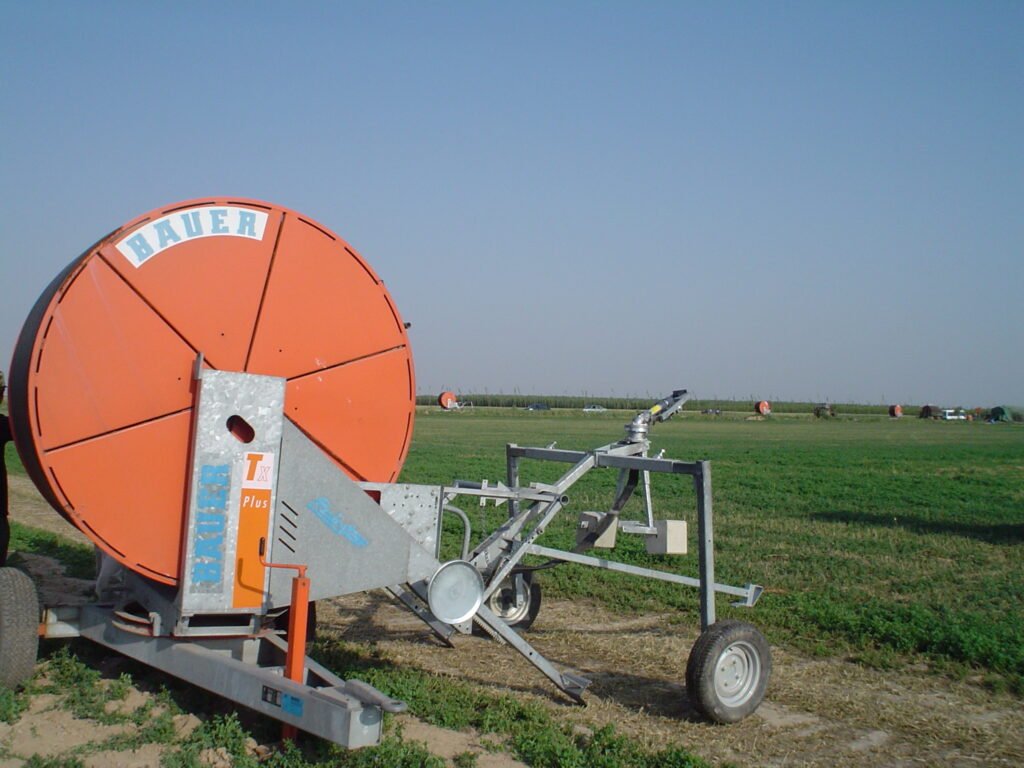
During peak agricultural growing seasons, a hose reel irrigator is critical to maintaining crop hydration, soil quality, and yield potential. Equipment failure during a drought or key crop growth phase can lead to stress on crops, reduced yields, and costly emergency repairs.
To ensure uninterrupted operation, agricultural operators must implement structured preventative maintenance and master basic troubleshooting techniques. This guide outlines essential daily maintenance routines, step-by-step solutions for common operational issues, and seasonal winterization protocols for hose reel irrigation systems.
1. Routine Preventative Maintenance Checklist
Systematic checks before, during, and after operation significantly extend equipment lifespan and prevent unexpected field downtime.
Pre-Operation Checks
- PE Pipe Inspection: Inspect the polyethylene (PE) pipe along its entire stored length for surface abrasion, severe kinks, deep scratches, or oval deformation.
- Gearbox & Lubrication: Check oil levels in the main drive gearbox and speed reducer. Ensure drive chains, turntable swivel bearings, and level-wind guide screws are adequately greased.
- Water Inlet & Seals: Clean inlet filter screens and suction strainers. Inspect internal rubber gaskets, O-rings, and mechanical seals around the main swivel joint to prevent pressure loss.
- Tire & Chassis Anchor: Verify tire pressure on both the main chassis and the sprinkler cart. Ensure stabilization legs and front tractor drawbar pins are securely locked into position before pressurizing the system.
In-Operation Monitoring
- Retraction Speed Uniformity: Observe the rotation of the drum and level-wind mechanism to verify that the PE pipe retracts at the set speed (m/h).
- System Pressure: Monitor the inlet pressure gauge. Sudden drops or spikes indicate pump cavitation, line blockage, or nozzle issues.
- Pipe Spooling: Ensure the automatic level-wind mechanism layers the PE pipe evenly across the drum without overlapping or leaving wide gaps.
Post-Operation Procedures
- Pressure Release: Safely bleed off residual internal pressure before disconnecting supply hoses or moving the unit.
- Flushing: Flush the internal turbine housing and lower pipe sections if pumping water with high sediment, sand, or mineral content.
2. Step-by-Step Troubleshooting Guide
When operational issues occur in the field, use the following diagnostic workflows to resolve them quickly.
Issue 1: Uneven Retraction Speed or Reel Stopping
- Potential Cause A: Water pressure or flow rate is below the minimum operational threshold required to turn the drive turbine.
- Solution: Check the pump discharge pressure and water source supply line for obstructions, clogged suction strainers, or air leaks.
- Potential Cause B: Foreign debris or stones jammed in the turbine impeller or gearbox drive gears.
- Solution: Disconnect water pressure, open the turbine bypass/inspection valve, and manually remove obstruction.
- Potential Cause C: Mechanical binding in the drum drive chain or level-wind drive assembly.
- Solution: Check drive chain alignment, adjust tensioners, and apply heavy-duty open-gear grease.
Issue 2: Loss of Pressure or Reduced Spray Distance
- Potential Cause A: Nozzle obstruction or excessive nozzle wear on the rain gun or spray boom.
- Solution: Shut off water flow, clear debris from the nozzle orifice, or replace worn nozzle tips with correct diameter sizes.
- Potential Cause B: Leaks or loose connections along the supply hose, swivel joint, or PE pipe connections.
- Solution: Tighten quick-coupling clamps and replace worn swivel seals or flange gaskets.
- Potential Cause C: Water turbine bypass valve left partially open.
- Solution: Adjust the speed control / bypass valve to direct adequate water flow through the turbine impeller.
Issue 3: PE Pipe Spooling Misalignment
- Potential Cause A: Level-wind guide screw mechanism out of synchronization with drum rotation.
- Solution: Inspect level-wind drive chain/gears. Re-align the guide carriage to match the pipe lay position per manufacturer settings.
- Potential Cause B: Machine anchored on uneven ground causing chassis tilt.
- Solution: Re-level the machine chassis using support jacks and ensure the cart pulls directly perpendicular to the drum axis.
3. Winterization & Seasonal Storage Protocol
Proper winterization prevents severe damage caused by freezing water expansion in pumps, turbines, valves, and pipelines.
- Drain All Residual Water: Fully open all low-point drain plugs, turbine drain valves, safety blow-off valves, and rain gun drain ports. Use compressed air if necessary to purge water trapped inside low internal channels.
- Clean & Protect PE Pipe: Ensure the PE pipe is completely spooled onto the drum under light tension. Avoid leaving the pipe stretched out in fields during freezing off-seasons.
- Lubricate Exposed Components: Apply heavy rust-inhibiting grease to exposed shafts, chains, level-wind screws, and hydraulic ram rods.
- Sheltered Storage: Park the unit on dry, level ground—preferably inside a covered machine shed—out of direct UV exposure, extreme weather, and standing water.
Dependable Performance with HT Bauer Support
Regular maintenance paired with high-quality components ensures long-term operational reliability. HT Bauer provides comprehensive technical support, original replacement parts, and engineering assistance to keep your hose reel irrigation systems operating at peak efficiency season after season.
For technical manuals, spare parts orders, or service inquiries, contact our engineering support team:
- Website:HT Bauer Official Site
- Email: sunlei@htbauer.com
- Technical Support: Request genuine spare parts catalogs or service documentation.