
Two-Wheel vs. Four-Wheel Chassis: Selecting the Right Hose Reel Frame for Your Farm

When evaluating a mobile hose reel irrigator, buyers often focus on PE pipe length, turbine efficiency, and sprinkler gun models. However, the design of the machine’s underlying support frame and axle chassis plays an equally critical role in daily field mobility, equipment stability, and long-term structural service life. Hose reel irrigators are generally built on […]
Agricultural Wastewater & Slurry Application Using Heavy-Duty Hose Reel Systems
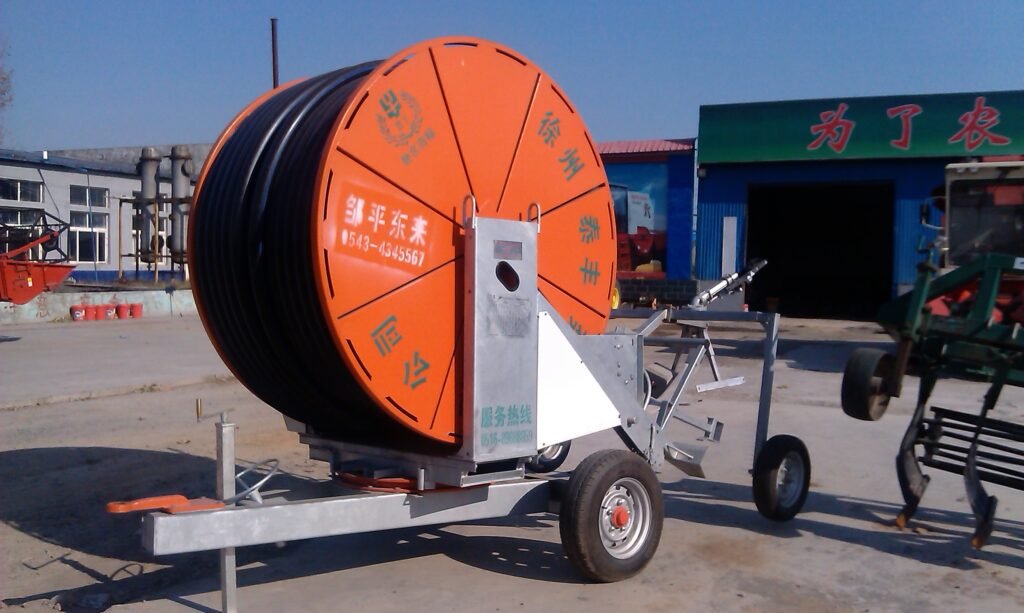
Modern livestock operations, dairy farms, and biogas plants face strict environmental regulations regarding agricultural effluent and slurry management. Liquid manure, swine slurry, and anaerobic digestate are nutrient-rich organic fertilizers that, when applied correctly, significantly reduce a farm’s reliance on synthetic chemical fertilizers. Deploying a mobile hose reel irrigator engineered for heavy fluids provides an efficient, […]
Low-Pressure Foldable Spray Booms for Hose Reel Irrigators: Gentle & Energy-Efficient Crop Watering
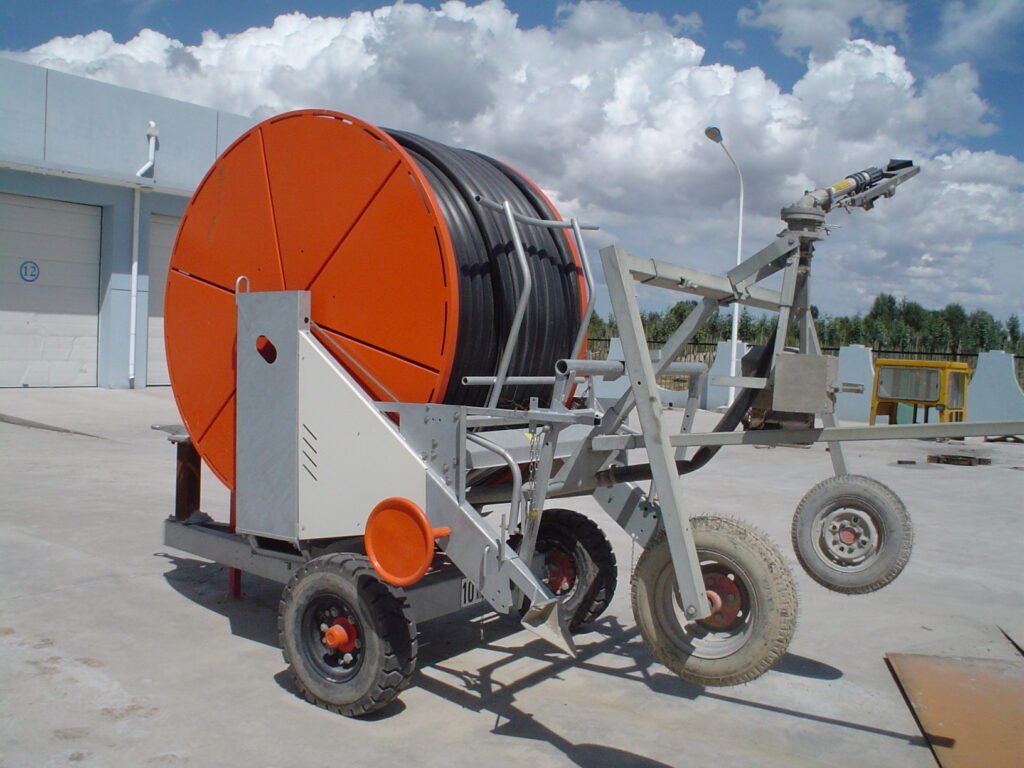
While big-gun rain heads are widely used on hose reel irrigators for high-volume broadacre watering, certain crops require a far more delicate touch. Delicate vegetables, tender leafy greens, newly seeded flowerbeds, and shallow-rooted specialty crops can be damaged by the heavy droplet impact and high wind-drift of traditional long-range rain guns. To meet these agronomic […]
High-Pressure Rain Gun Selection & Nozzle Matching for Hose Reel Irrigators
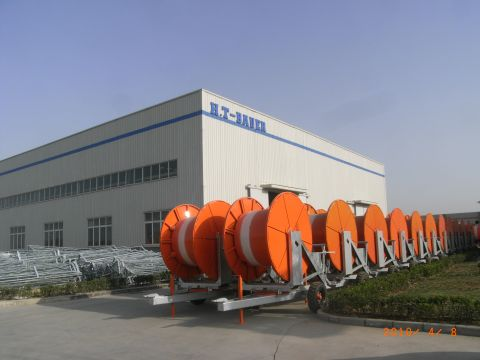
On mobile hose reel irrigators utilizing long-range single rain guns, achieving uniform water coverage depends heavily on selecting the correct rain gun model, trajectory angle, and nozzle orifice size. The rain gun must throw water over wide strip widths (often 50 to 90+ meters) while breaking the water stream into uniform droplets across the entire […]
Large-Diameter PE Pipes for Long-Distance Hose Reel Irrigation: Flow & Friction Management
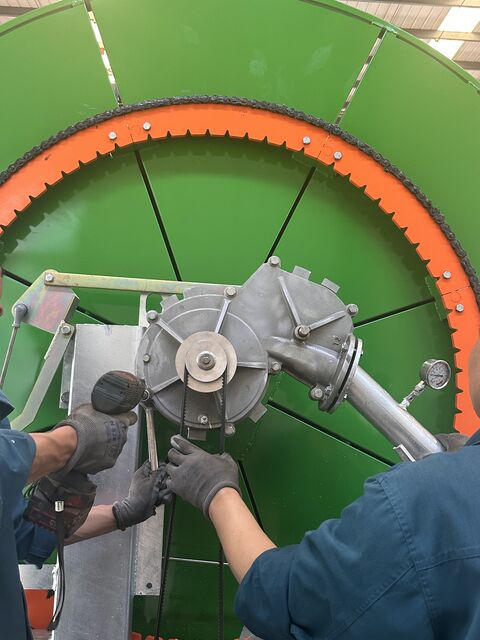
For large commercial fields, agricultural pasture blocks, and sugarcane plantations, field travel length directly impacts operational productivity. Long travel runs reduce the frequency of moving the heavy machine chassis between field setups, saving valuable operator labor and maximizing daily watering coverage. However, extending travel distances up to 400, 500, or 600+ meters requires pulling large-diameter […]
Advanced Water Turbine & Gearbox Engineering: The Drive System Behind Reliable Hose Reel Irrigators
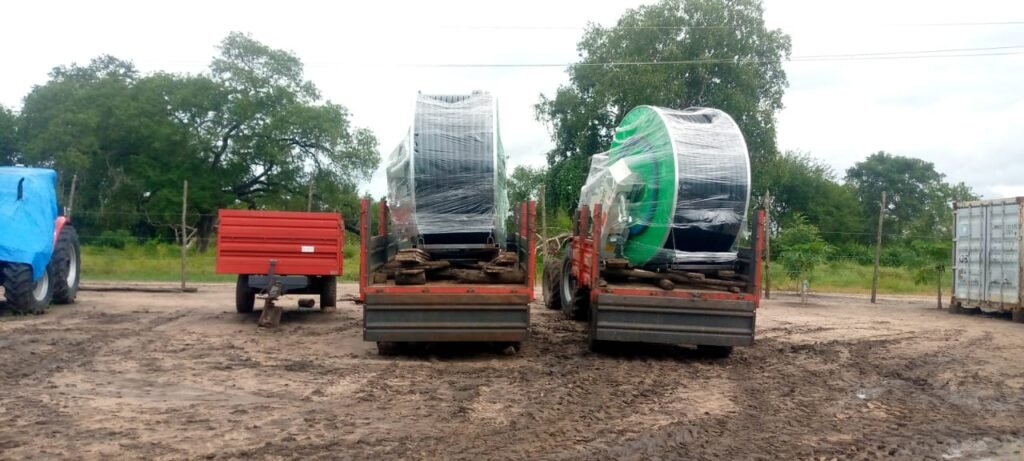
At the mechanical heart of every automatic traveling hose reel irrigator lies its drive system. Unlike center pivots or linear move systems that often rely on external electric power grids or standalone diesel generators at each tower, a traditional hose reel irrigator utilizes the kinetic energy of the pressurized water itself to drive its pipe […]
Factory Testing & On-Site Commissioning for Linear Move Systems

Purchasing and installing a commercial linear move irrigation system is a major capital engineering project. To guarantee that heavy steel spans, alignment controls, hydraulic drives, and automated guidance systems perform flawlessly in the field, a rigorous quality control process must be executed—from factory manufacturing through on-site field commissioning. Skipping formal commissioning steps can lead to […]
Chemigation & Fertigation Injection Engineering for Linear Move Systems

Overhead linear move irrigation systems offer an ideal platform for precision chemigation (applying herbicides, insecticides, and fungicides) and fertigation (delivering liquid nitrogen, phosphorus, potassium, and micronutrients). Because linear systems move uniformly at a continuous forward speed, they distribute crop inputs with high precision across 100% of the field area. However, executing safe and effective chemigation […]
Soil Intake Rate & Application Intensity: Matching Linear Systems to Soil Types

A critical factor in designing a commercial linear move irrigation system is ensuring that the rate of water application matches the intake rate (infiltration capacity) of the field soil. Applying water faster than the soil can absorb it leads to surface runoff, water pooling in low-lying areas, topsoil erosion, and severe nutrient leaching. Different soil […]
Wind-Resistant Structural Design & Storm Protection for Linear Move Systems

Operating across open agricultural plains leaves large mechanized structures vulnerable to extreme weather events. High ambient wind gusts, microbursts, and severe summer storms place immense mechanical stress on long overhead pipe spans and drive tower frames. Without proper structural engineering and field storm protocols, severe windstorms can cause span tipping, truss deformation, or structural misalignment. […]